
胡同感知展间:大栅栏社区图书馆
大栅栏社区图书馆位于我们改造设计的PAGEONE书店办公空间 (再造胡同剧场:PAGEONE办公室与艺文展场改造) 的对面,我们将两个项目看作一组并联互动的故事,如同胡同中被打开的一本书,延展出逐层叠合的功能空间。
对于社区图书馆的定义,除了阅读行为本身外,更重要的是公众对于“阅读”的理解。我们将与阅读有关的感知体验功能植入这个胡同里的社区图书馆,以令公众在有限的空间中体会阅读与自我的关系和此时此刻在胡同的感知。
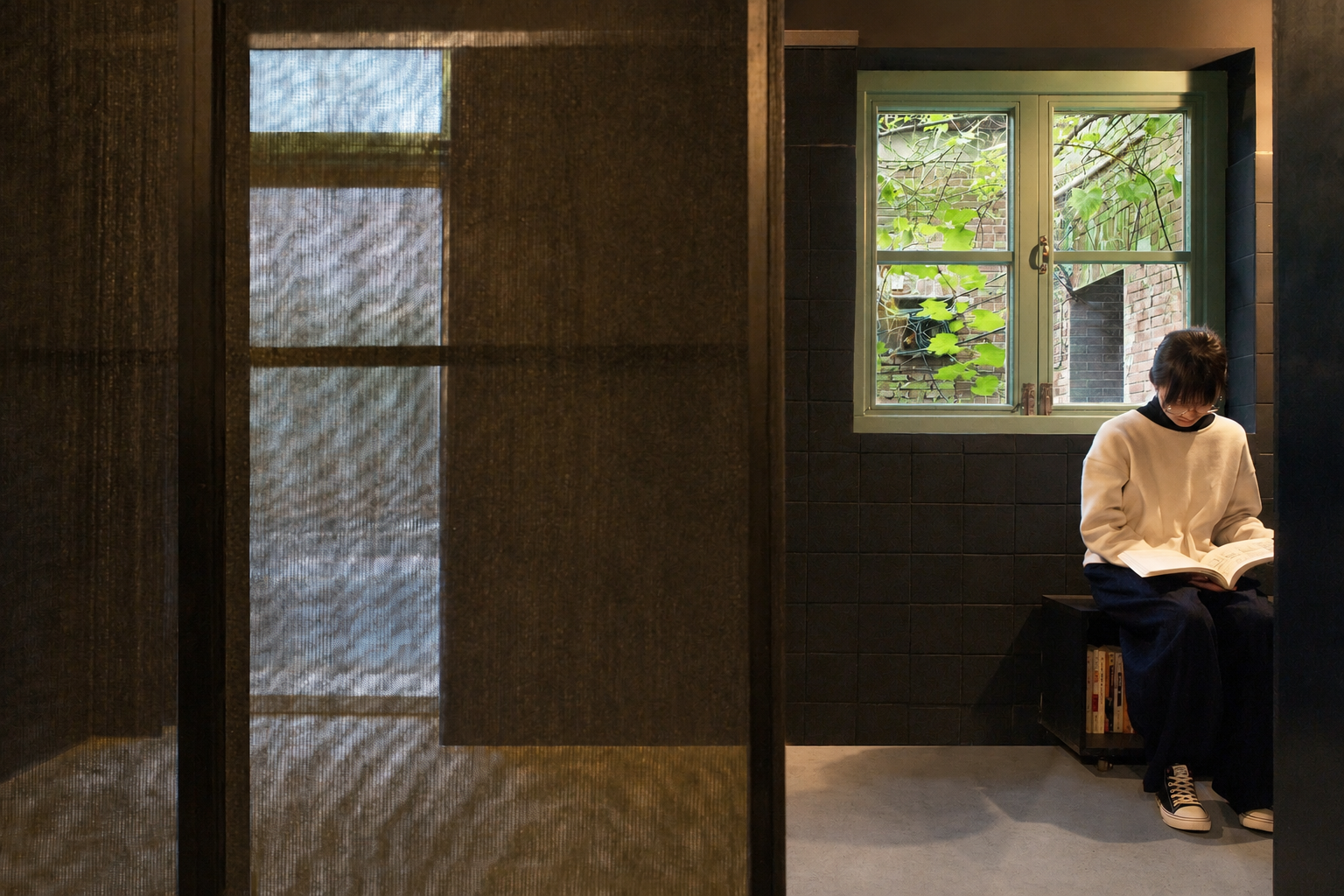
这个约160平米的胡同空间在之前经历了轻率的重组和改造,我们发现其潦草的施工反而保留了部分原有的生活痕迹。原状四组并置的室内空间由三个并不对位的门洞串联,与胡同和一侧的院子通过几乎相同尺寸的窗建立着各自的视线和空间关系。由入口走向空间深处,空间或为公共尺度或至只可容纳个人的进深尺度,自然生成体验节奏。
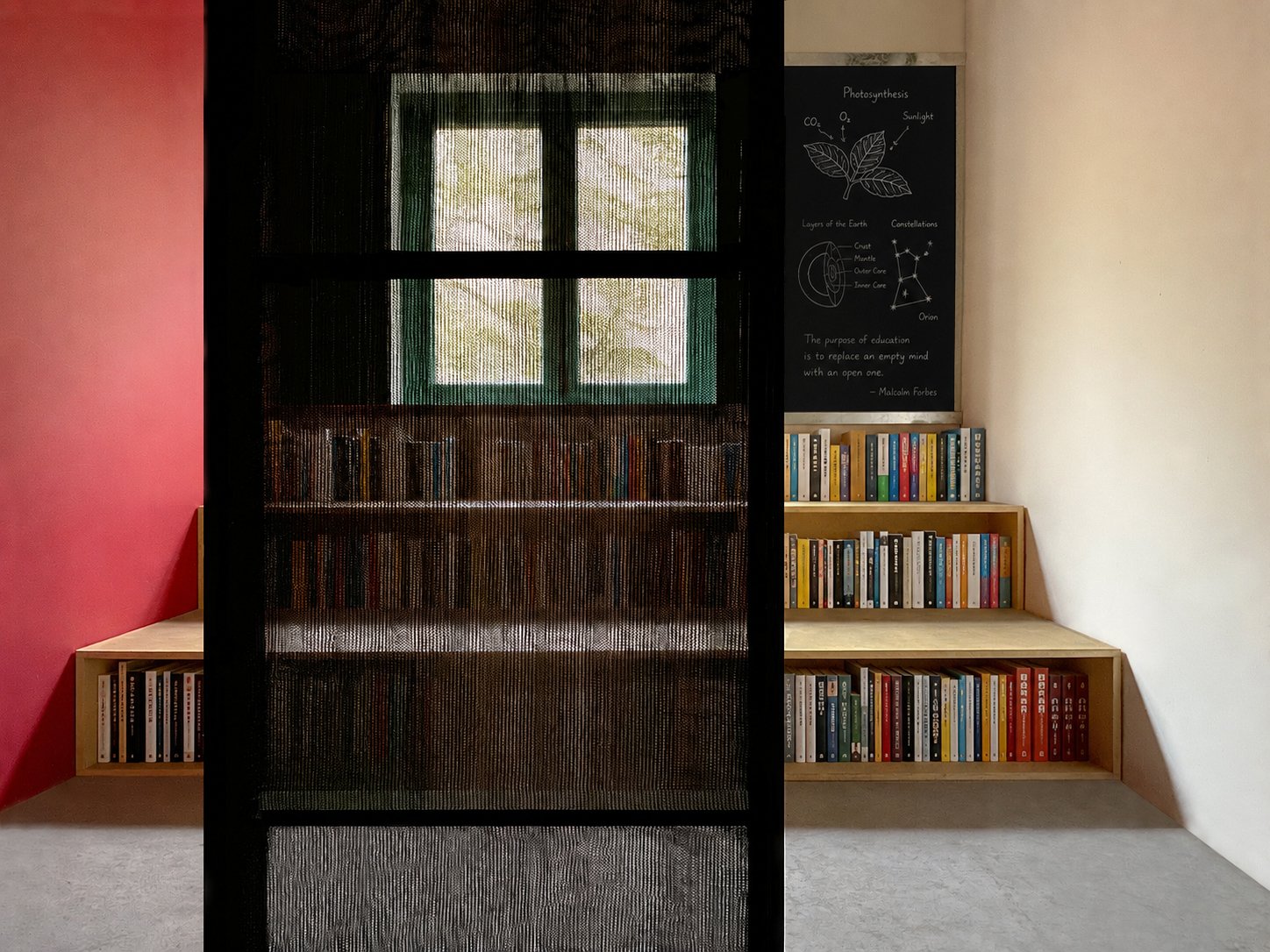
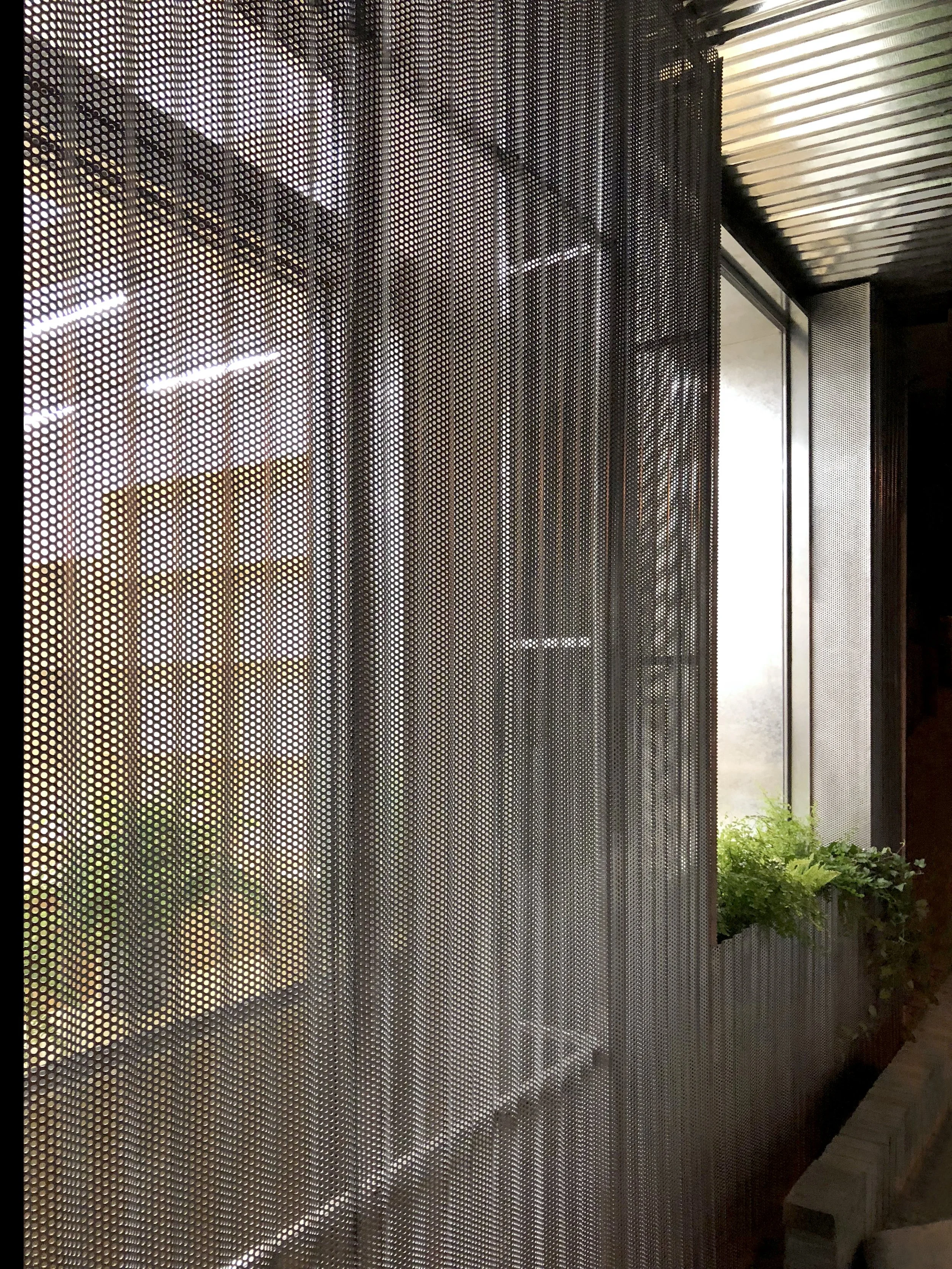
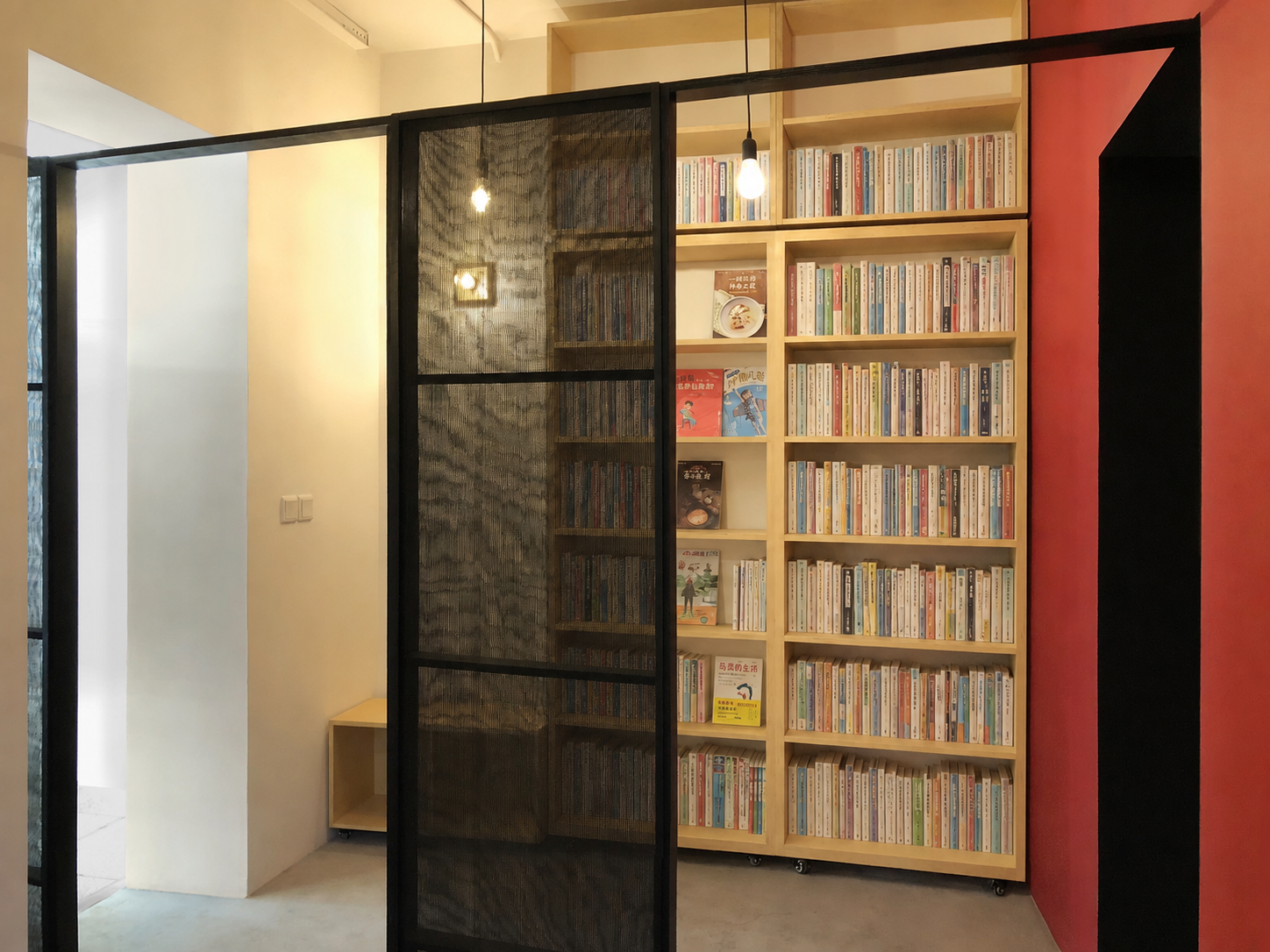
新的功能根据原空间尺度和开放性植入-- 多功能活动区、儿童阅读区、人文艺术阅读区和实验放映室。我们以线性展示装置介入旧的空间,揭示空间的递进关系并暗示空间的复杂经历。线性展示装置由木构架和黑色遮阳网构成,承担了定义分区的功能,同时其本身亦作为图书馆的展览界面和放映室的投影界面。我们维持了原有窗的位置、尺寸和颜色,在赋予新功能的空间中,它们与书架、座椅、线性展示装置、菜园和胡同自然建立新的关系。
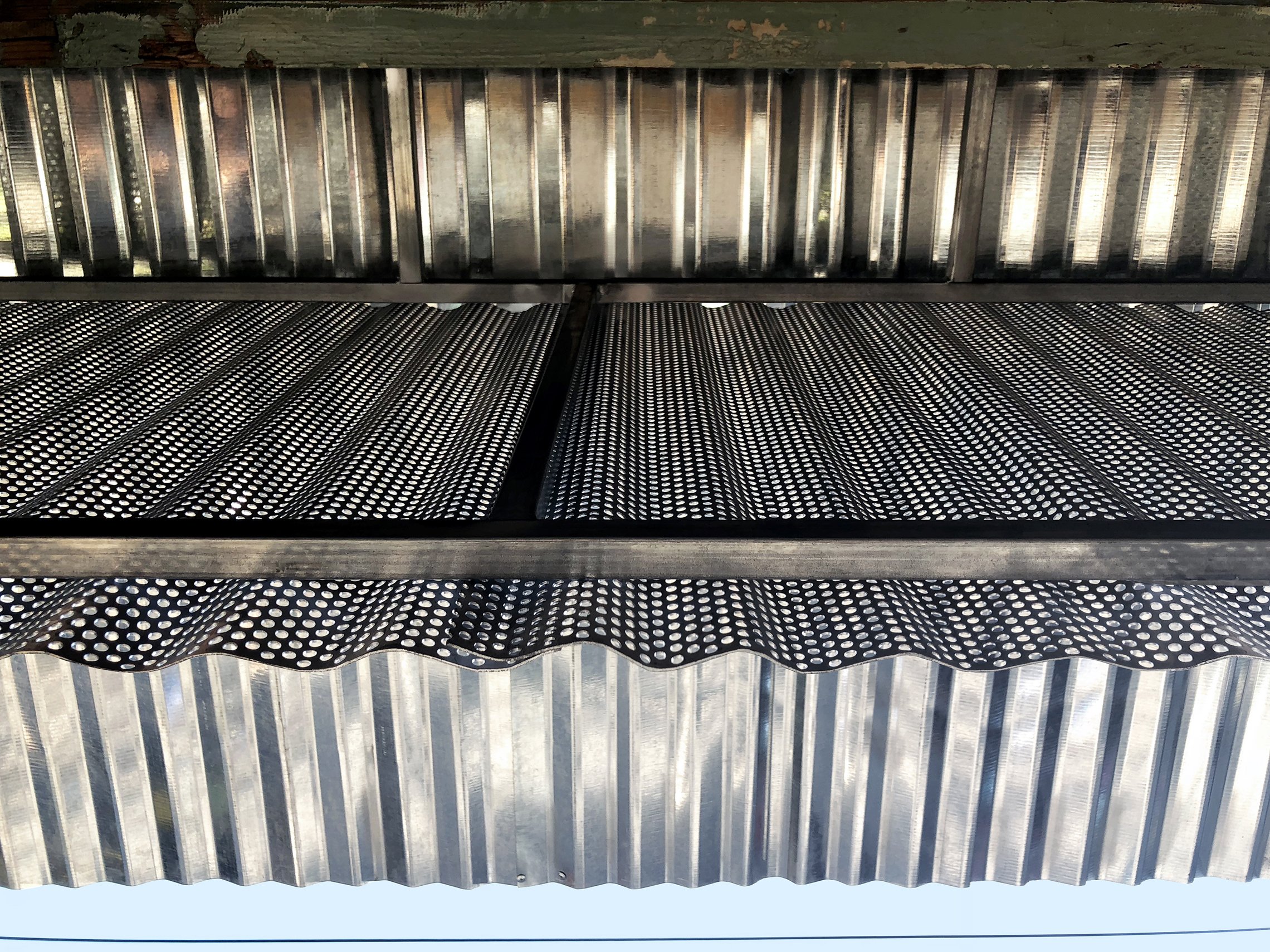
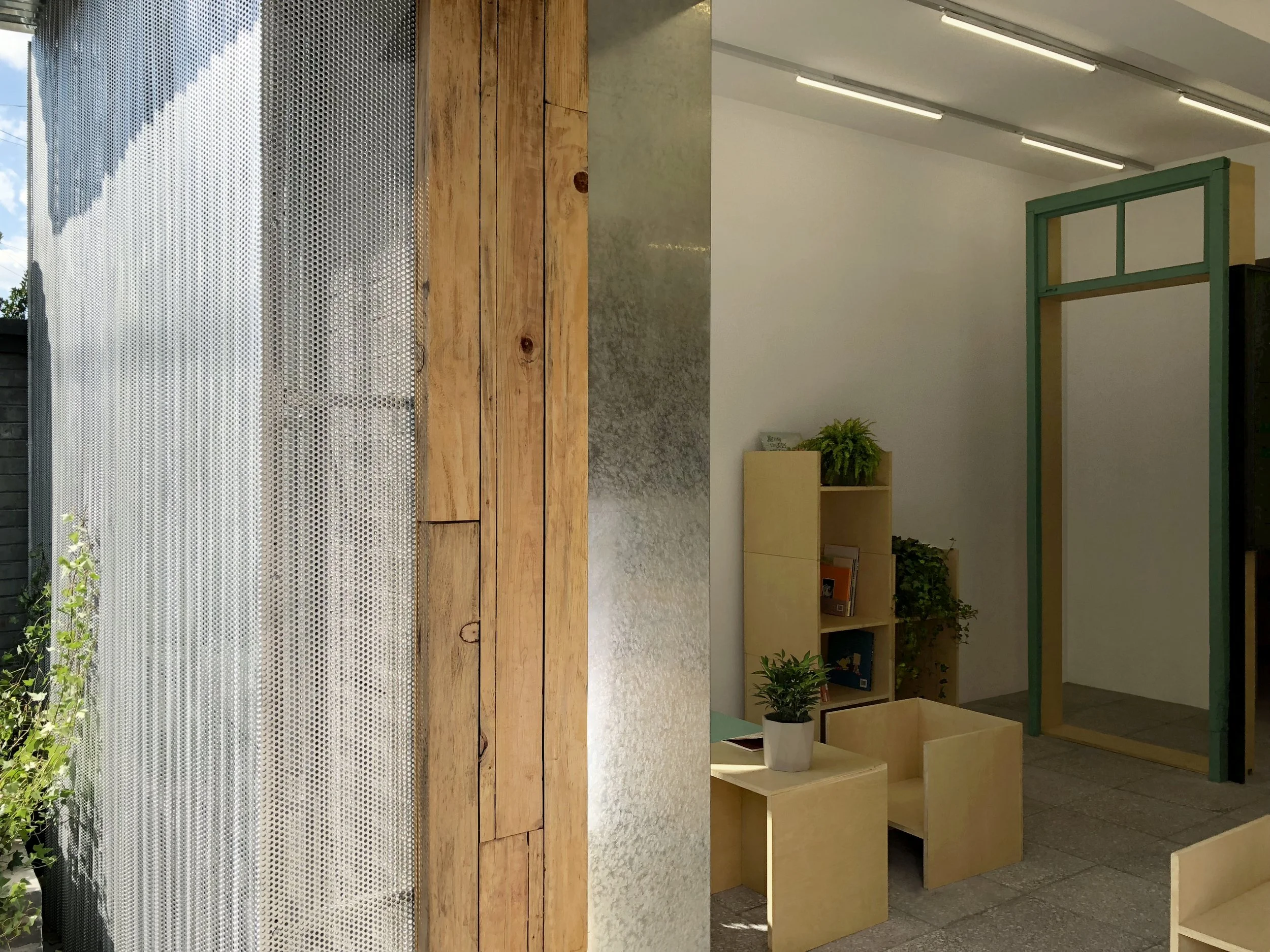
延续我们在以往的胡同改造项目中的材料和工法,大栅栏社区图书馆改造选用了回收的旧木门窗框;胡同中临时搭建经常出现的镀锌钢板、金属波纹板;便于快速施工组装的多层板; 以及可引发人们某种好奇心和亲切感的遮阳网。我们试着用经济的方式将这些胡同生活里的日常材料在场所内展现本身的质感、营造新的氛围。
项目信息
业主方:大栅栏社区 / PAGEONE
设计方:即作建筑 MINOR lab
设计团队:刘晨, 赵丹, 王艺祺, 叶品晨
建筑面积:160 ㎡
摄影:即作建筑 MINOR lab
Hutong Perception Exhibition Space: Dashilar Community Library
The Dashilar Community Library is located opposite the PAGEONE office space that we redesigned (Revitalizing Theatrical Hutongspace:Pageone Office And Exhibition Space). We view the two projects as a pair of interconnected stories, like a book opened in the middle of a hutong, unfolding functional spaces layer by layer.
In defining the community library, beyond the act of reading itself, what matters more is the public’s understanding of “reading.” We have embedded perceptual and experiential functions related to reading into this hutong community library, allowing visitors to explore the relationship between reading and the self, and to sense the present moment within the hutong, all within a limited space.
This approximately 160-square-meter hutong space had undergone hasty restructuring and renovation before. We found that its rough construction had inadvertently preserved some of the original traces of daily life. The existing interior consisted of four juxtaposed rooms connected by three misaligned doorways, and each maintained sightlines and spatial relationships with the hutong and an adjacent courtyard through windows of nearly identical size. Walking from the entrance toward the depths of the space, one encounters areas either scaled for public use or limited to a single-person depth, naturally generating a rhythm of experience.
New functions were introduced in response to the original spatial dimensions and openness: a multifunctional activity area, a children’s reading zone, a humanities and arts reading section, and an experimental screening room. Linear display installations were inserted into the old space to reveal spatial progression and hint at the complexity of its experiences. Constructed from wooden frames and black sunshade nets, these installations define spatial zones while simultaneously serving as exhibition surfaces for the library and projection screens for the screening room. We preserved the original window positions, dimensions, and colors. Within the newly programmed space, they establish organic relationships with bookshelves, seating, linear display installations, the vegetable garden, and the hutong.
Following the materials and construction methods of our previous hutong renovation projects, the Dashilar Community Library incorporates reclaimed wooden doors and window frames; galvanized steel sheets and corrugated metal panels commonly seen in makeshift hutong structures; plywood for rapid assembly; and shade netting that evokes curiosity and a sense of intimacy. We have attempted to use economical means to bring out the intrinsic textures of these everyday hutong materials within the space, creating a new atmosphere.
Project Information
Client: Dashilar Community / PAGEONE
Design Firm: MINOR lab
Design Team: LIU Chen, ZHAO Dan, WANG Yi-qi, YEH Pin-chen
Floor Area: 160㎡
Photographer: MINOR lab